We are back in Paris, in a new hotel and after recovering from our trip from Rennes, yesterday we decided that we were ready for a bit of exploration. We started locally, visiting the street market in Boulevard Edgar Quinet in Montparnasse. The market had stalls of clothes, African artifacts, scarves, shoes, belts, bags and soaps
but the main focus is food. When we were originally planning our trip, we were going to rent apartments, but the need to be able to cancel our trip at the last moment meant that hotels were safer to book. This market really made me envious of those with a kitchen. The most popular stall with a long, but patient, queue was the one which specialised in heirloom tomatoes. I grow some of these but they truly had a formidable collection with huge variations in colour, shape, size, and I dare say, taste.
A lot of the other stalls had fruit and vegetable that we are familiar with in Australia, but there were some things which were on offer which we are less familiar with like green almonds and green hazelnuts
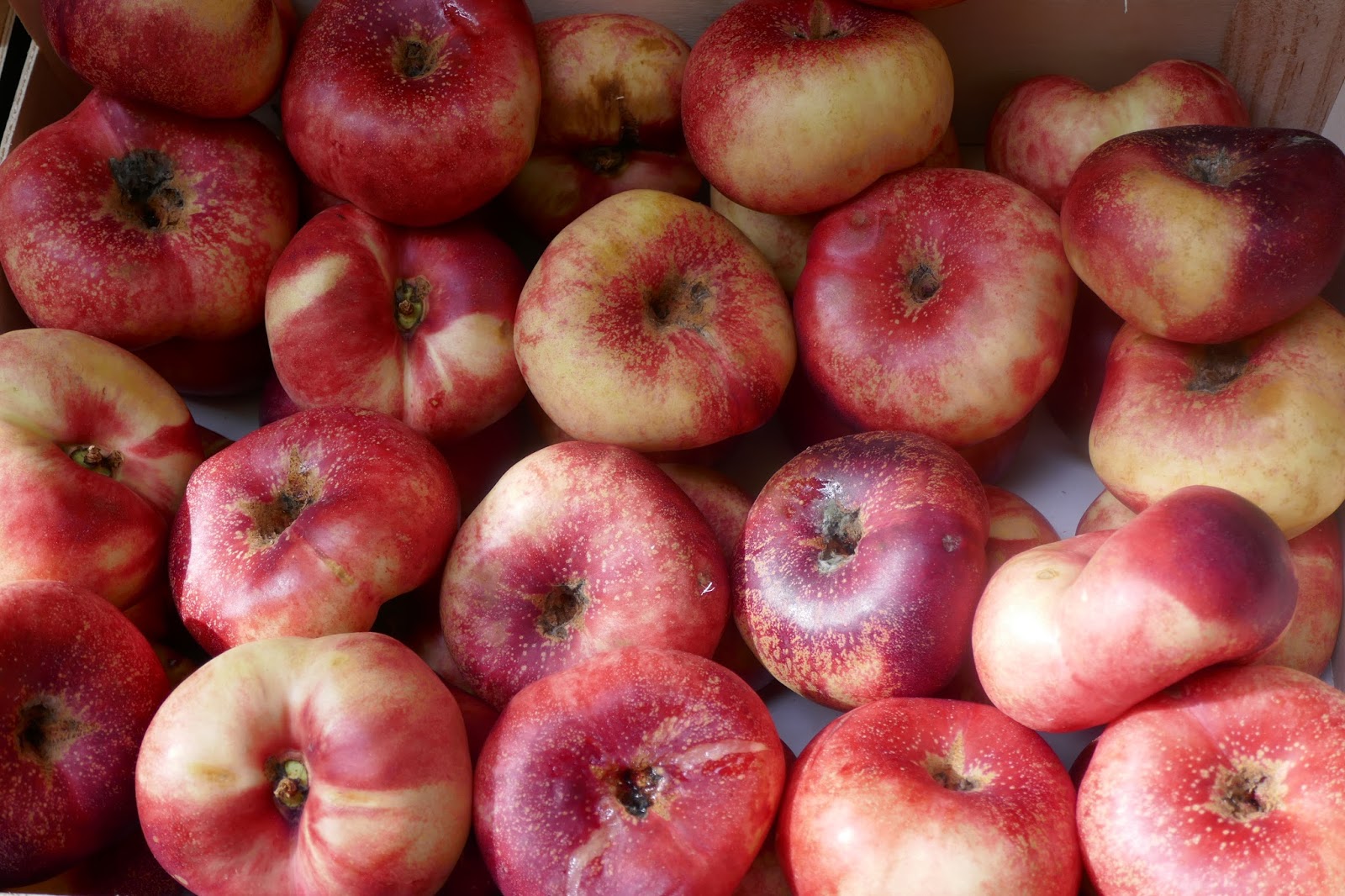
odd shaped peaches and nectarines
purple figs
and a variety of mushrooms
The charcuterie and cheese stalls were so tempting. I was groaning as I examined what was on offer.
The poultry and meat stalls were interesting. The offer a variety of chicken, duck and rabbit breeds. Plus the cuts are often very different to Australian cuts.
Of course there were artisan bread stalls.
and there were flower and plant stalls

France has had a long history of immigrants from their foreign colonies in Asia, Africa and the Caribbean. Of course, as in any society, there has been prejudice, but in many ways, these non- European French have been well accepted in society in the past. Remember that Alexandre Dumas of The Three Musketeers fame was the grandson of a slave from Martinique. France has also provided a refuge for African Americans treated badly in the USA, like the writer, James Baldwin, and the dancer and singer, Josephine Baker. France is proud of its European/ African or Afro- Caribbean representatives like Jo Wilfred Tsonga, the tennis player, or Caribbean born representatives like the football player, Thierry Henry, or African born representatives like actor/comedian Mouss Diouf. Many of its politicians are Afro- French. When one walks through any city in France, one sees French men and women who are obviously of African, Vietnamese and Caribbean descent, and one can see they mix as equals with their compatriots of European descent when one observes them in school groups, the cafes and the workplaces. There are many mixed-raced families in the streets. The recent surge in immigration from North Africa is noticeable since these recent arrivals still often dress in their traditional clothes, may have tribal scars or seem less integrated in society than those whose families have lived here longer. Unfortunately, the French of non- European race and these new arrivals may now be suffering from more fear and suspicion and less acceptance because of the larger number which are seeking haven here and because of the activities of a few mentally disturbed individuals and the activities of such groups like ISIS, however when the children are seen with their local peers, one can see that this is not always automatic. I thought that the popularity of a stall selling home cooked African fare was encouraging. It was not just Afro-French who were buying, but also older Euro-French.

After taking the fruit that we had bought home to our hotel, we visited the Montparnasse Cemetary, where many famous people are buried like Charles Baudelaire, the French poet, Samuel Becket, the Irish writer, Henri Fantin-Latour, the French artist, Carlos Fuentes, the Mexican writer, Jean Paul Sartre, the French philosopher and novelist and Simone de Beauvoir, the French philosopher and feminist.
and Eugene Ionesco, the Romanian playwright. People leave momentos at their favourite celebrity tombs, like the train tickets and cigarettes on Sartre and De Beauvoir's tomb.
However there are other tombs that are less well known but still interesting like that of Louis-Gustave Binger, the explorer who "gave " the Ivory Coast to France
and the film archivist and cinephile, Henri Langlois, whose grave is a crazy collage of film moments.
I also loved some of the art we found in the graveyard, some of it traditional
and some, a bit more unusual:
My favourite is this fish with breasts:
with a rather weird inscription by Berdal
Leaving the cemetery, we made for the Eiffel Tower by an approach through a rather dishevelled and grotty park.
The Eiffel Tower is not my favourite landmark, resembling a meccano set construction in my opinion, but the crowds show that I am in the minority. And, it is a wonderful homage to engineering and the scientists inscribed on the sides.
We should have stopped there, but after seeing collections of red cross stitch on white fabric in our first hotel, I got Bob to escort me to Le Bonheur des Dames in the Passage Verdeau to buy a kit, my urge to design my own cross stitches like I used to is long gone. She only had two, but had a lot of other nice patterns and materials, so I wasn't disappointed. I ended up buying one kit and a lot of embroidery threads, which were beautiful.
Then, we explored the Passage and the other two Passages- Passage Jouffroy and Passage des Panoramas. These Passages are very avant -garde and have a great mixture of shops - antique, art, stamps, umbrellas and walking stick, old postcards, children's toys, housewares and a museum, cafes and restaurants. We had a great time browsing.