Tuesday, 24 September 2013

Using rust to colour fabric, watercolour paper and wool

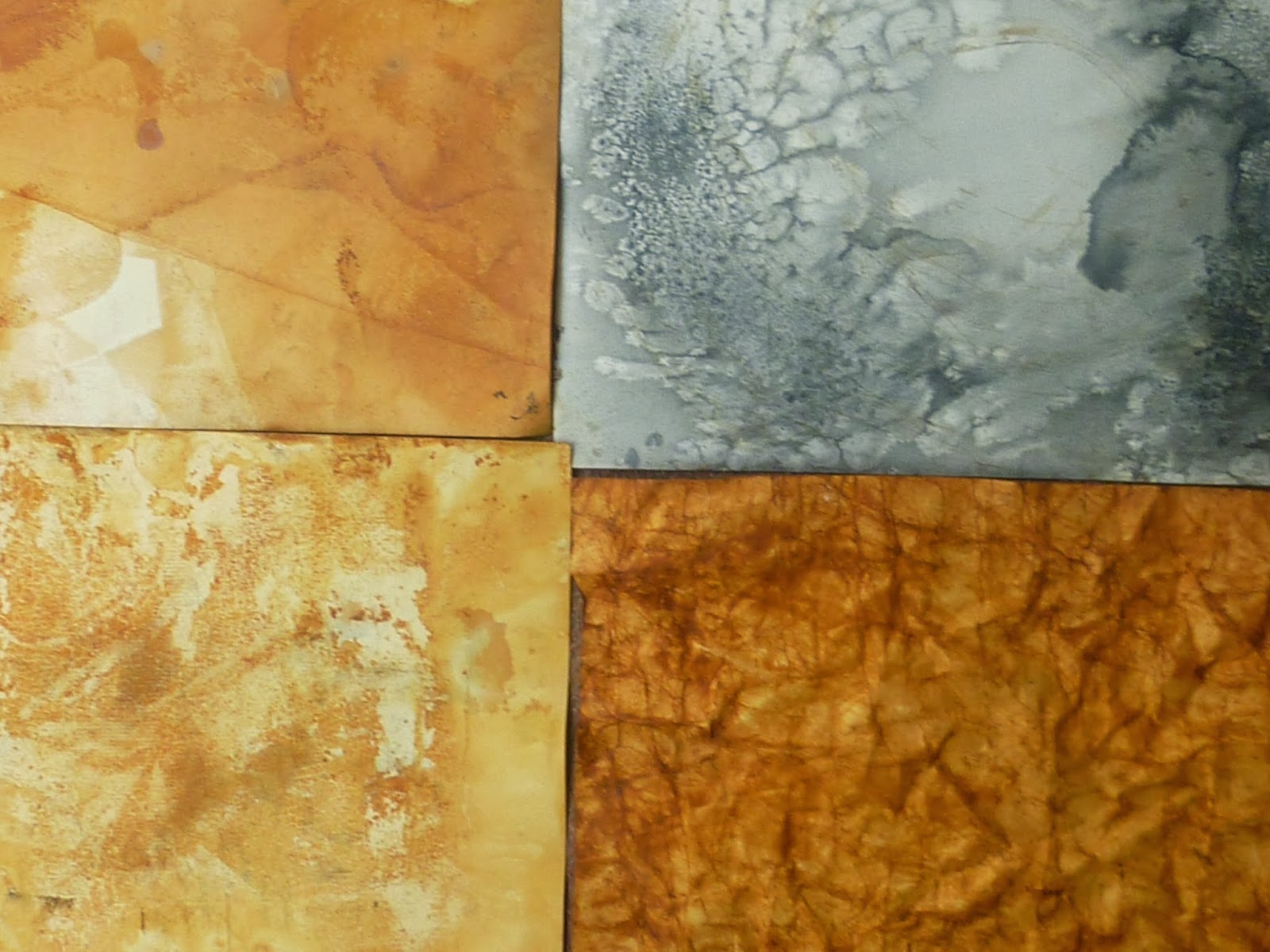
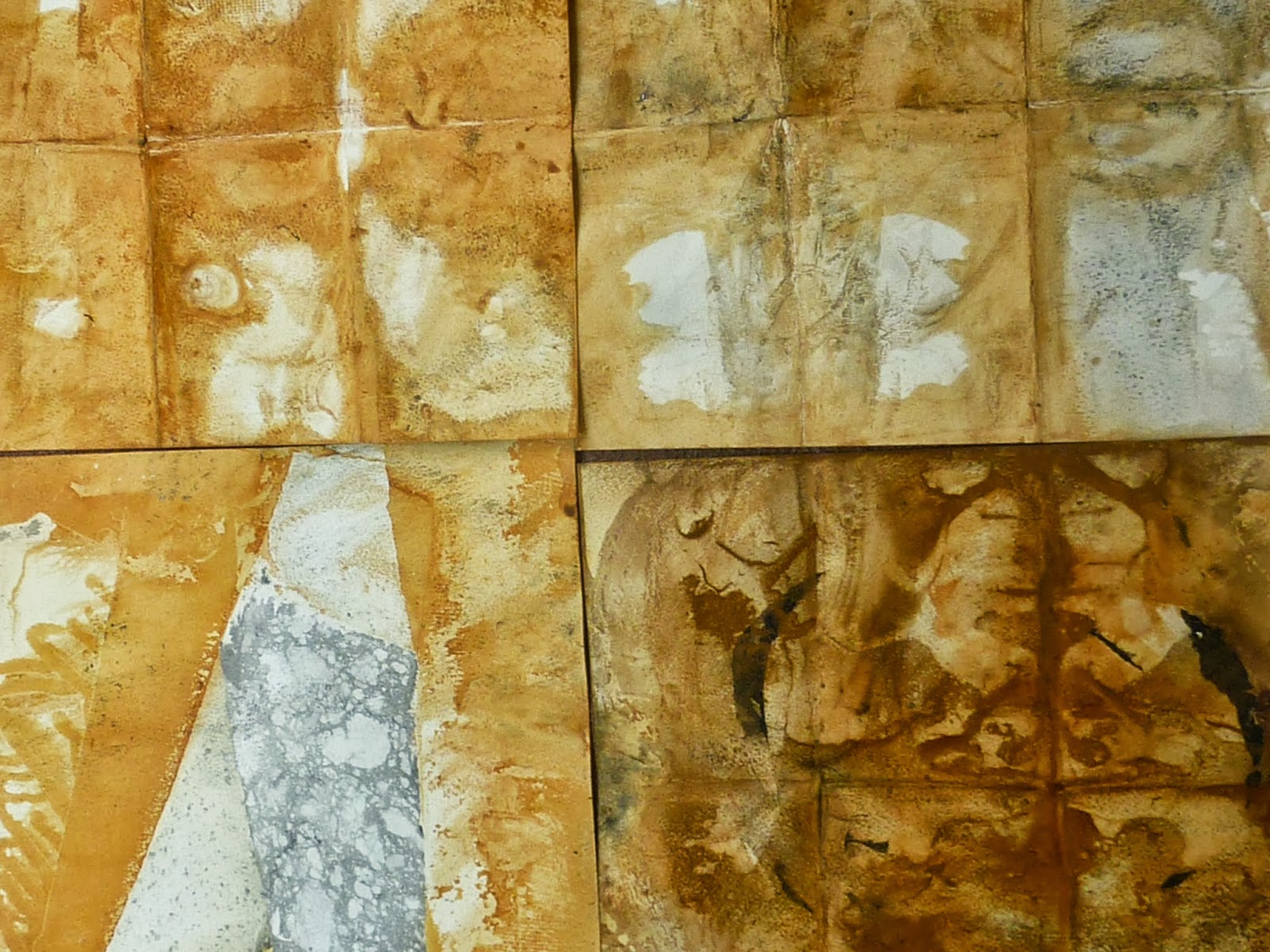
I was enormously chuffed last weekend to be invited to a rusting day at a friend's house along with a few fellow artists.  I packed cotton fabric, mulberry paper, rice paper and watercolour paper to dye because I only had a very vague idea of what we were doing.When I got there, a little late, they had already set up tubs of ferrous sulphate, tea, ink, bitumen and caustic soda for us to dip our papers in.  The idea, it was explained to me, was to dip the paper into one or more of the first four tubs, then into the caustic to effect a dye.  The paper could also be squirted with the first four, or coloured inks, or dishwashing rinse aid, or scattered with salt for special effects.  The patterns and depth of colour on the paper were affected by how long and how the papers were dipped into the solution and on what was dribbled, scattered, sprayed or dragged on it.  It was great fun.  Especially since, once the paper oxidised and was drying, its colour changed.  I love a surprise.


We kept checking each others' work and got so excited and prolific, we had to change from just drying the pieces on individual screens to using the drying rack.


Some of the pieces looked like landscapes, some like mixed media and some like watercolours.  We discovered that the more textured and better quality the paper, the better the effect.

I got confident enough to try scrunching up the water colour paper, and using the mulberry paper and rice paper and discovered that not only did this create a texture, but that the latter two became much more fragile, while adopting the properties of fabric.  Wonderful!


(This is the same piece of rice paper as it is drying)


(These are the scrunched up water colour papers while wet)

 
( This is the mulberry paper while wet)

I also tried out my white cotton fabric, sometimes using shibori or folds.  Wow!


One of my hosts introduced me to creating a rust effect on objects made of plastic, wood, etc by
1. painting the object with black paint to create a base, if wanted.
2. spraying it with adhesive
3. covering it with iron powder
4.  spraying it with Haynes Patina


I also learned, compliments of  "The Sculptor's Bible:  by John Plowman and my host , of different patinas which can be effected using things like cupric nitrate ( which gives a green patina).

As well as learning a lot about rusting, I got lots of ideas for other projects from my hosts:


(Repurposing books)


( Repurposing chicken bones)


(Decorating a workshop door)

Another artist folded some of her dyed papers to begin making a book.


 She also worked the rust onto a canvas.


I was introduced to inspiring books, "500 Handmade Books:  Inspiring Inspirations of a Timeless Form" by Lark Books, and Fairie-ality style:  A Sourcebook of Inspiration from Nature" by David Elwand.  Great sources of ideas.

I returned home exhausted, but on a high.  My friends were going to continue on, using a dremel on some of their papers.  I can't wait to see the results, and to try this out myself - as well as using the paper to make bowls, books and pictures.

The next day, I got to work on creating a shaman doll by using an artists mannequin and tattooing its hands and face with pens, collecting rusted bottle caps outside the local pub, rusting some wool fleece with vinegar and steel wool, making a shield from bits of an old belt and using some of my papers, collection of feathers, threads.  This is the result:


Wednesday, 18 September 2013

A trip to Walkerville South and spring blossoms.

We went down south to Victoria for a weekend at Walkerville South with some very old friends and were stunned at all the green growth and the spring blossoms.  I had forgotten how beautiful spring can be.

We stayed at Bear Gully Coastal Cottages, which are wonderfully situated on the cliff overlooking Wilson's Promontory, and beautifully landscaped with a mainly native garden to give the feeling of privacy, and yet take advantage of the view.


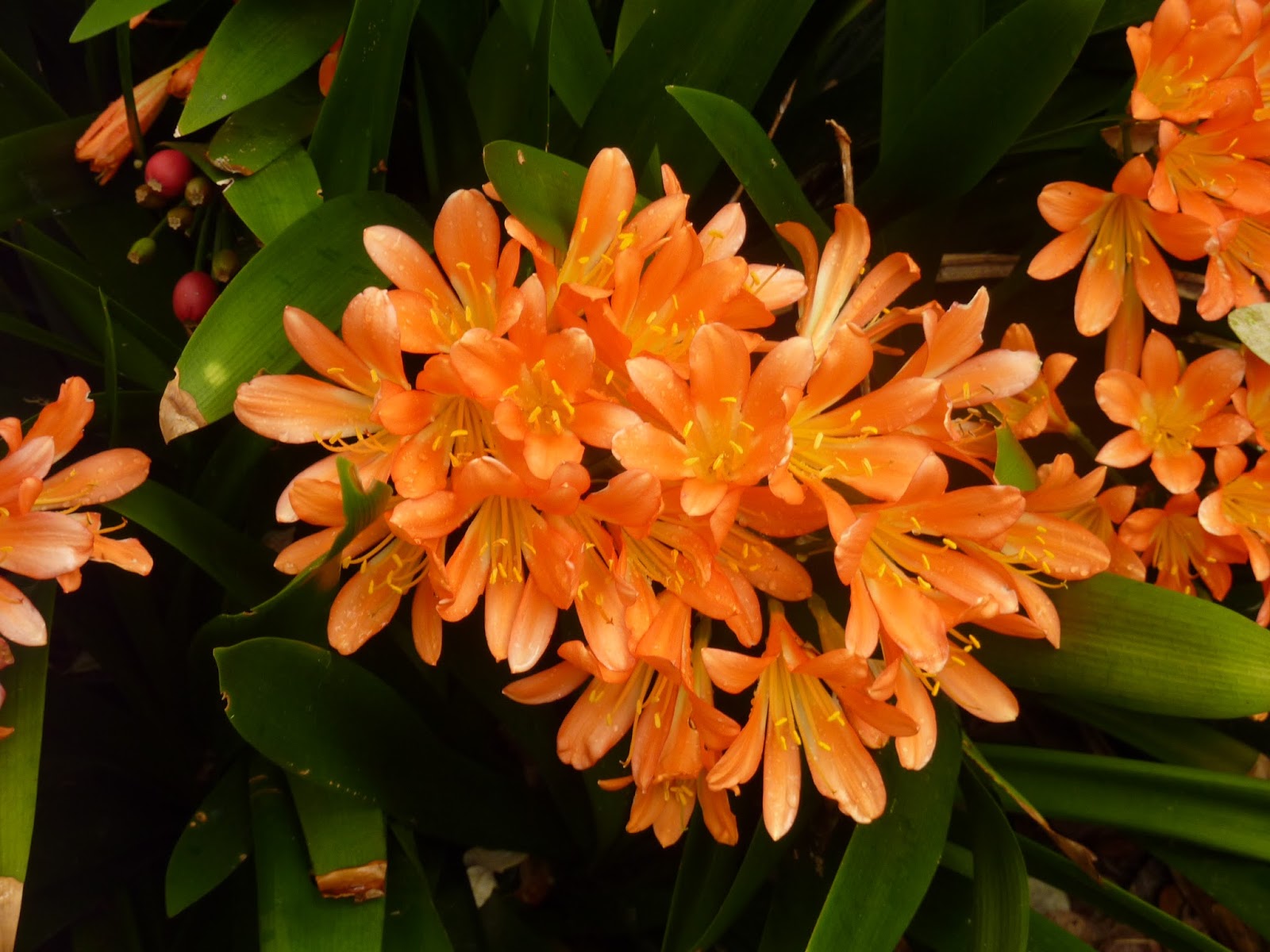
One of our friends had brought a wildflower book so we wandered around trying to identify the plants and photographing the nicest flowers.


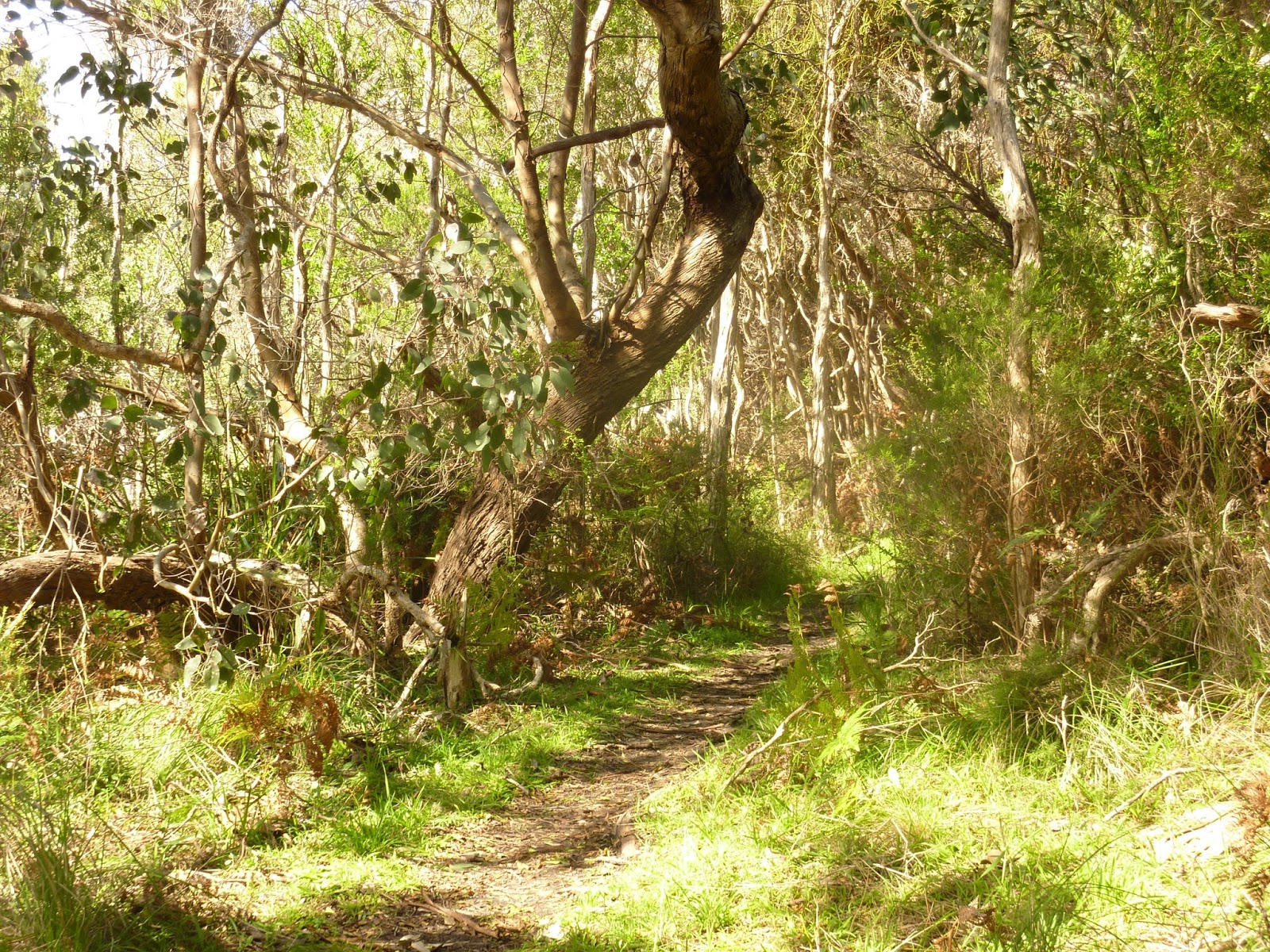
Then we walked down to the foreshore through wonderful ti-tree woods


to the foreshore.  The birdlife was fantastic:  sea eagles, blue wrens, magpies, kookaburras, crimson rosellas, honeyeaters, and my favourite, beautiful little swallows.  (  At night, we were visited outside by sweet little bats swooping after the insects drawn to the lights of the house).  We saw no snakes, but did see a wallaby, and this blue tongue lizard sunbaking by the side of the path:


The beach was full of wonderful textures in its rock, sand, shells, plants and water, so we spent a lot of time walking, rock pool exploring, shell seeking and photographing inspirational sights:


\
On the last day, we went up to the Cape Liptrap lighthouse to admire the incredibly rugged view.  No wonder they have had so many ship wrecks along this coast.

 
Back in Melbourne, we discovered that the spring had sprung too!  There were flowers all over the garden, and visiting ravens, honeyeater and lorikeets:


Makes me itch to get out the watercolours.  What a pity it was a flying visit.

Pinterest inspiration


If you have been following my Pinterest boards, you will have noticed that I have spent a lot of time over the past few weeks pinning inspirational ideas.  However, this time has not really been wasted, because I have also been doing a lot of creating as a result of some of my pins.  For instance, I made these little creations using felt, embroidery threads and bits from some of my discarded jewellery and left over beads:


Also as a direct result of my pins, I have been making bowls out of PVA glue and mulberry paper impregnated with leaves that I found in my local Thai supermarket.  Yes, I know that it is very retro, but it is fun and I really like the results.


Speaking of my local Thai supermarket, I bought dried Red Cotton Tree flowers  and  Sorrel ( hibiscus sabdariffa)


I boiled the cotton fabric in soda ash, mordanted it with alum and boiled it in the dried flower soup.  The colour was amazing, but I had to rinse the fabric to get off the sludge and it faded a lot.  I also dyed with purple carrots and the same thing happened. I really haven't got much control in this eco-dyeing yet.  I need to do a workshop.  I still like the fabrics I got, but was hoping for something darker.  I haven't lost enthusiasm though, because my efforts with dyeing waterproof paper were much more successful.  Now to decide to do with all the fabric and paper.

Pinterest also encouraged me to embroider on a jean shirt with variegated Japanese yarn.  Subtle but I really like the effect.  Here are some of the images I free-hand embroidered


And, I finally finished knitting the beanie for the other half.  Believe it or not, he has actually worn it up here in Brisbane!